ServicesWhole-Home Filtration
Whole-Home Filtration in Surprise
We install whole-home filtration on the main line, so every shower, faucet and appliance in your home gets water without the chlorine smell and taste. Each system is sized to your plumbing and household, so the water feels better and the pressure holds.
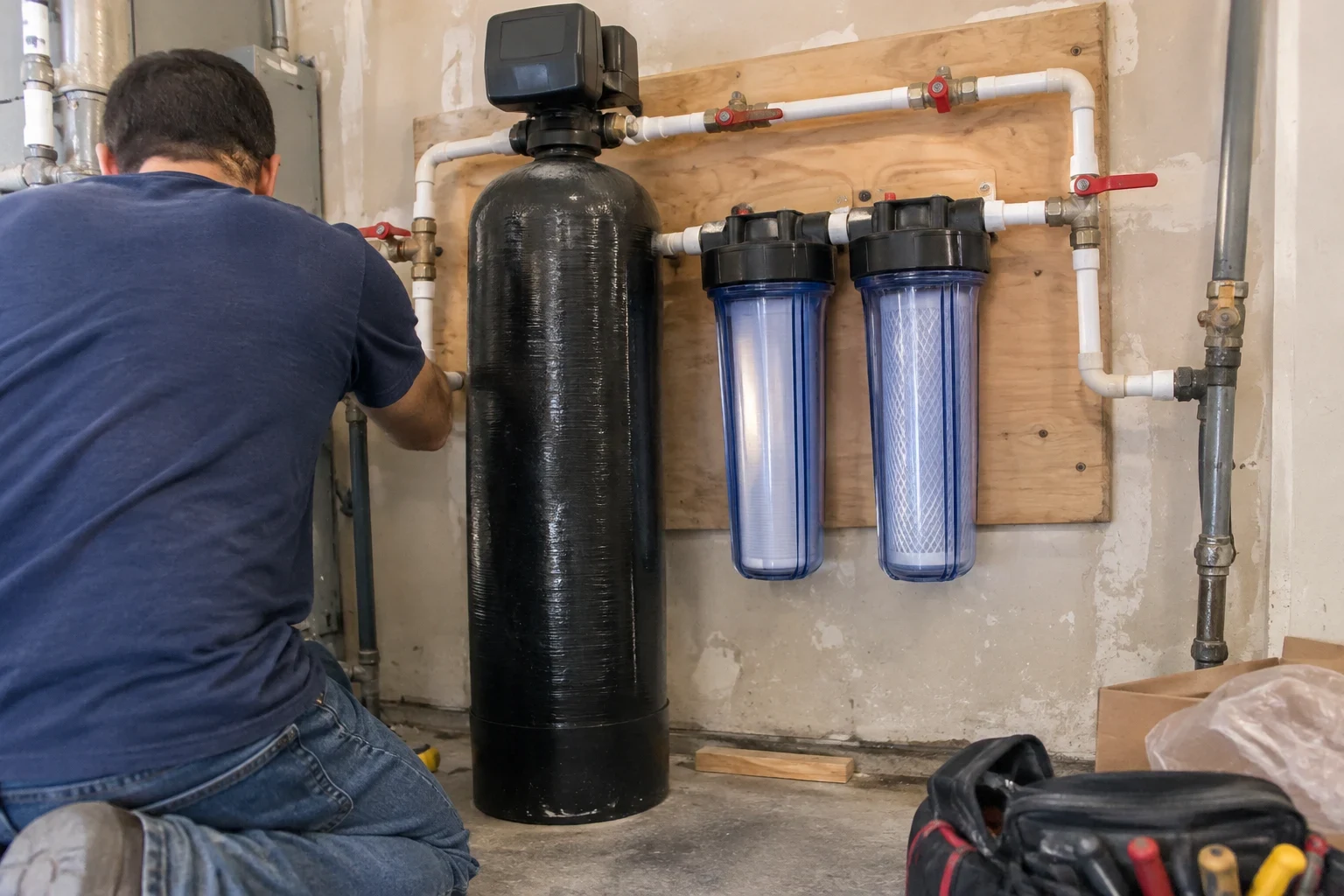
What a whole-home filter does for your water
City water is disinfected before it reaches your home, and that disinfectant is what you smell in a hot shower and taste in a glass from the kitchen tap. A whole-home filter uses a bed of activated carbon to pull it out at the point where water enters the house. Every outlet downstream benefits, not just one faucet.
We focus on the parts that decide how a system lives with you: the size of the media tank, the quality of the carbon, the valve that runs it and how cleanly it is plumbed in. A tank that is too small wears out early and can choke your flow. One that is sized correctly runs quietly for years with very little attention.
Filtration is not the same as softening. Carbon does not remove the hardness minerals that leave spots and scale. Many homeowners pair the two, and we can plan both at once with our water softener installation.
What is included with your system
Sizing to your home
We look at the number of bathrooms, the people in your home and the size of your main line. That sets the tank size and flow rate so the shower upstairs runs as well as it did before.
Carbon media tank and control valve
For most homes we recommend a backwashing media tank instead of a stack of cartridges. It cleans itself on a schedule and avoids the frequent cartridge swaps that add up over time.
Sediment prefilter where it helps
A sediment stage catches grit before it reaches the carbon. That protects the media and keeps it working longer.
Bypass valve and clean plumbing
Every install includes a bypass, so water to your home never has to stop if the system needs service. Lines are run square, supported and labeled.
Startup, flush and walkthrough
We flush the new media, set the valve and show you where the bypass is and what the display means before we leave.
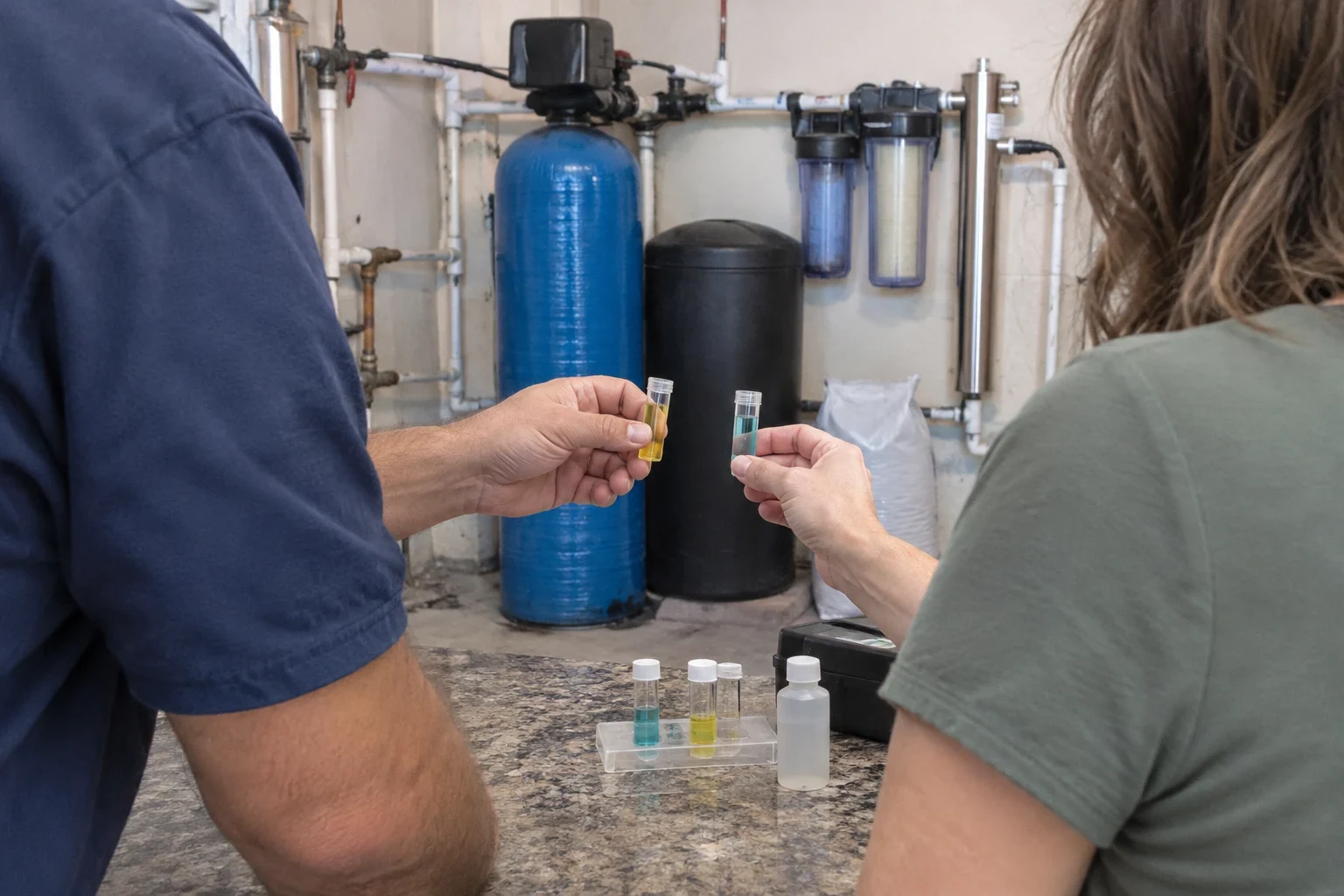
When whole-home filtration makes sense
- Your shower smells like a pool
- Steam carries chlorine off hot water, so a small bathroom with the door shut fills with that smell fastest. A system on the main line treats every shower in the house at the same time.
- Only the pitcher water tastes right
- If a jug in the fridge is the only thing making water drinkable, every other tap in your home is still running untreated.
- Skin and hair feel dry after a shower
- A lot of people find their skin feels less tight once chlorine is gone from the bath water. It is often the first change homeowners bring up after the install.
- Replacing cartridges all the time
- Fridge and under-sink filters that need frequent swaps can add up to more over a few years than one well-sized whole-home system.
- A softener is already on your list
- If you are planning a softener anyway, that is the easiest time to put filtration on the same loop.
From first call to a working system
- 1
Start with a phone call
Describe what bothers you about the taste or smell and give us a rough picture of the house. We ask how many bathrooms you have, how many people live there and where the main line comes in.
- 2
Checking the install spot
We look at where the tank will stand and how the pipes are routed. In many homes around Surprise the main line sits in the garage, often with a loop already plumbed, which keeps the job neat.
- 3
An itemized written quote
The tank, control valve, any prefilter and labor each appear on their own line. When a smaller or simpler setup will do, we tell you.
- 4
The install itself
Water goes off for a short stretch while we level the base, set the tank, plumb the bypass and tie the system in. Floors are covered as we work and the space is cleaned up afterward.
- 5
Flushing and handover
We run water through until it comes out clear, check each fitting for drips and show you how the bypass and valve settings work.
What sets the price of a whole-home filter
No two houses ask the same thing of a filter. Your price comes down to how much equipment your home needs and how much plumbing it takes to fit it properly. The tank, valve, any prefilter and the labor each sit on their own line of the written quote, so nothing is folded into one lump figure you have to take on faith.
- Tank size and flow rate
- A house with more bathrooms needs a larger tank holding more carbon. That keeps pressure steady when a shower, the dishwasher and a laundry cycle all run together.
- Media tank or cartridges
- A backwashing tank asks more up front and very little afterward. Cartridge housings are cheaper to install but cost more each year in replacements.
- Existing plumbing and access
- If a loop is already waiting in the garage, the work is simple. Moving lines, running a drain for the backwash or fitting into a cramped corner adds labor.
- Pairing with a softener
- Putting filtration and a softener in on the same visit shares the plumbing and the labor, which usually costs less than two separate installs.
Whole-home filtration FAQs
- Does carbon filtration also fix hard water?
- It does not. Activated carbon takes out chlorine taste and smell, while the calcium and magnesium behind scale and spotting flow through untouched. For crusty fixtures and cloudy glassware you want a softener, and it can sit on the same loop as the filter.
- Is my water pressure going to drop?
- With a tank matched to your home, you should not feel a difference. Weak pressure after an install almost always traces back to a tank that is too small or a cartridge that has clogged. That is why we ask about bathrooms and household size before we suggest a system.
- What maintenance should I expect?
- A backwashing media tank rinses itself on a timer, so day to day there is nothing for you to do. The carbon bed is replaced only after a good number of years, and a busy household that runs a lot of water will reach that point sooner than a couple living alone. Cartridge setups need changes on a regular schedule. We spell out the upkeep for your specific setup before you commit.
- Will filtration lower my running costs?
- On its own, the savings are small, and we would rather say so. Most people notice it in fewer replacement filters and less bottled water. Combined with a softener, it also helps keep scale off your water heater and fixtures, and that is where efficiency gains really show up.
- Is there a warranty if I add a softener too?
- Yes. A softener installed alongside your filter comes with a 15-year warranty on the resin. We explain what covers the filtration parts during your phone call so the terms are clear before any work starts.
- Should I add reverse osmosis as well?
- That depends on what you want from your drinking water. A whole-home filter handles chlorine everywhere in the house. A reverse osmosis system under the kitchen sink goes a step further for the water you drink and cook with.
Cleaner-tasting water at every faucet and shower
Give us a sense of how many people live in your home and what bothers you about the water. We will recommend a system that suits it and go through each line of the quote with you.