ServicesWater Softener Installation
Water Softener Installation in Surprise
We size, install and program a water softener for your home so hard water stops coating your fixtures, clouding your glassware and building scale inside your water heater. The work is tidy and clearly explained, and the unit is set up to use salt and water sparingly.
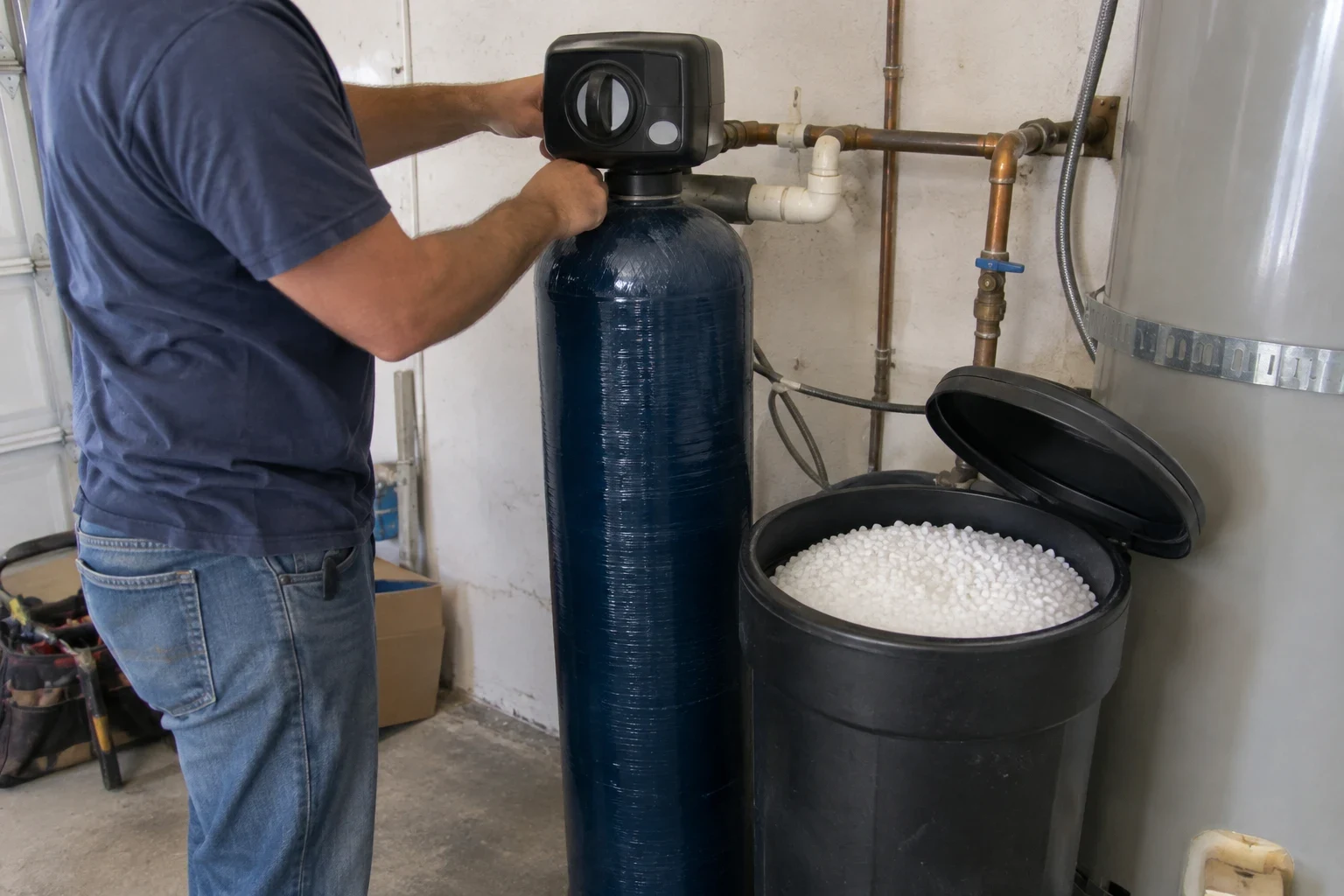
What a well-installed softener does for your home
Water across the West Valley carries a heavy load of calcium and magnesium. Left alone, those minerals settle as white crust on faucets and shower glass, and as a hard layer in the bottom of a tank water heater or across the heat exchanger of a tankless unit. Scale insulates the water from the burner or element, so the heater works longer to reach the same temperature.
A softener removes those minerals before they reach your pipes and appliances. That is where the comfort and running-cost benefit is genuine: a heater free of scale heats more efficiently, dishwashers and washers need less detergent, and fixtures keep their finish.
The benefit depends on the install. A unit that is too small regenerates constantly and wastes salt. One that is oversized or set on a fixed timer wastes water. We take the time to get both right.
What your installation includes
- Sizing to your household
- We ask how many people live in your home, how many bathrooms you have and how you use water, then match the unit's capacity to that. Right-sized resin means fewer regenerations and less salt over the years.
- Connection at the loop
- Many homes in the area have a softener loop already plumbed in the garage. We tie into it and add a bypass valve, so if the softener ever needs attention, a quick turn keeps water flowing to your taps without passing through the tanks. Where there is no loop, we explain what adding one involves before any work begins.
- Drain line and air gap
- The brine discharge runs to a proper drain with an air gap, so wastewater can never siphon back into the unit. We route the line neatly along the wall rather than leaving loose tubing on the garage floor.
- Metered, demand-based settings
- We program the control valve to regenerate based on the water you actually use, not a fixed calendar. That single setting does more for salt and water costs than almost anything else.
- Resin backed for 15 years
- The resin inside the tank does the softening, and it carries a 15-year warranty. We walk you through what that covers when the unit goes in.
Signs your home is ready for a softener
Crust on faucets and shower glass
White or chalky deposits that come back days after cleaning are minerals dropping out of your water.
A water heater that pops or rumbles
Those sounds usually mean scale has settled in the tank. The heater is spending energy pushing through that layer every time it fires.
Spotty dishes and stiff towels
Hard water leaves film on glassware and makes laundry feel rough, even with extra detergent.
Dry skin after a shower
Soap reacts with hard minerals and leaves a residue. Many people notice their skin and hair feel different within a week of softening.
An old softener that no longer keeps up
If your current unit runs out of capacity, leaks brine or still uses a timer, a replacement sized for today's household is often the better investment than repairs.
How the work goes
- 1
A conversation by phone
You tell us about your home, your water heater and what you are noticing. We talk through unit sizes and give you your quote by phone, so you know the scope before anyone arrives.
- 2
Arrival and protection
We lay down floor protection, confirm the location at the loop and check the electrical outlet and drain access. If an old softener is coming out, we disconnect and remove it.
- 3
Installation
We set the resin and brine tanks, connect the bypass, run the drain line with its air gap and pressure-test every joint. Most installs at an existing loop are finished in a few hours.
- 4
Startup and programming
We fill the brine tank, run a first regeneration and set the valve for your household size and water use.
- 5
Walkthrough and cleanup
Before we leave, we show you the bypass, how to check salt and how to read the display. The garage is left as clean as we found it.
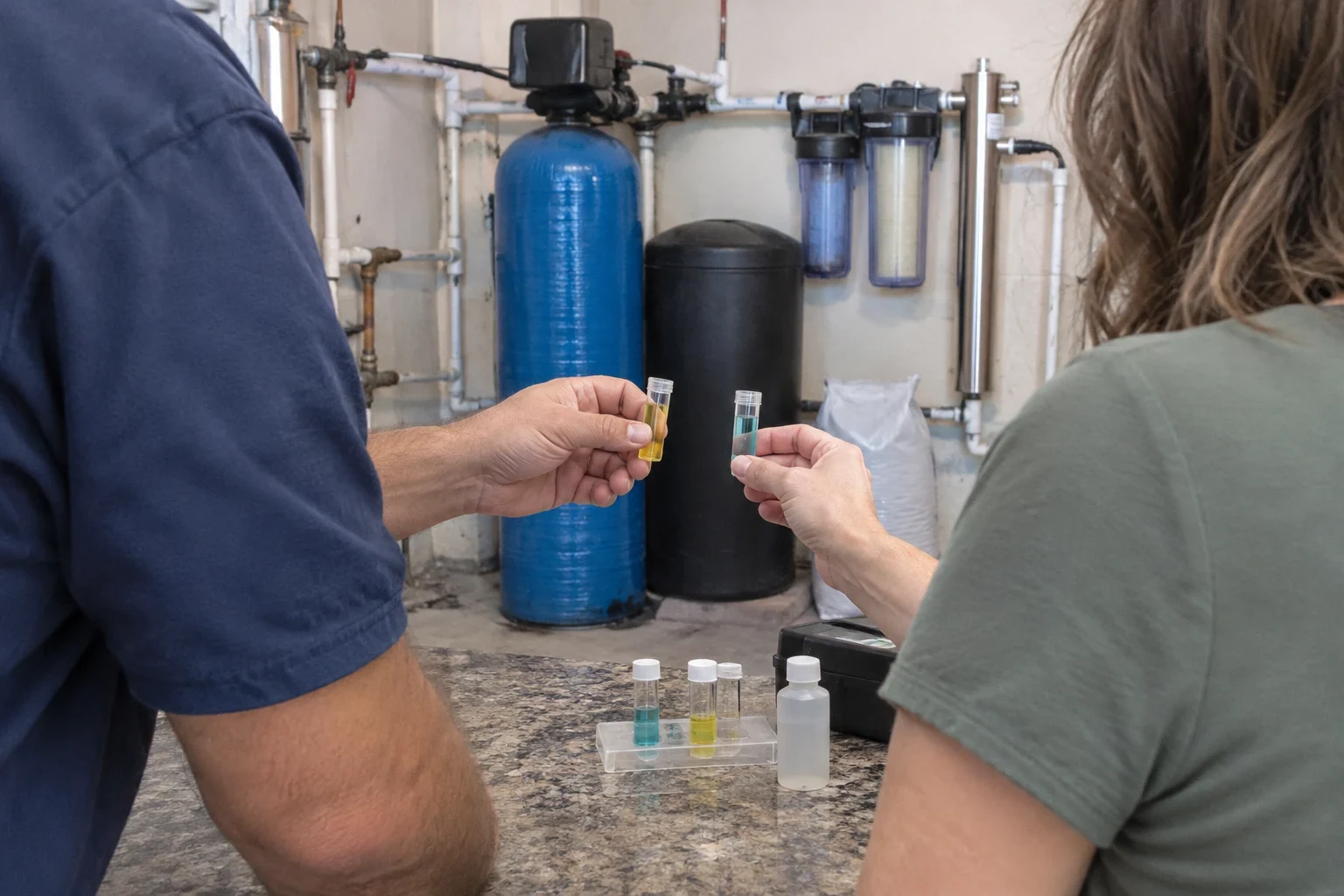
What moves the price of an installation
No two garages or plumbing layouts are quite alike, so we quote each softener installation on the work your home calls for. We explain each part of the job by phone before anything is scheduled. These are the details that matter most.
- Existing loop or a new one
- Tying into a loop that is already plumbed is a straightforward job. Building a new loop means opening the main line, which takes more time and more material.
- Resin capacity and control valve
- A larger household needs a tank with more resin. A metered valve adds a little to the upfront cost and tends to earn it back through lower salt and water use.
- Distance to drain and outlet
- When a drain and an outlet sit close to the loop, the work stays simple. A long drain run or a new outlet adds labor.
- Taking out the old unit
- Some jobs include disconnecting and hauling off an existing softener, and some do not. We note it in your quote either way.
Questions about softener installation
Something not covered here? (623) 887-4658
Will a softener really lower my energy costs?
It can help where scale is the problem. A water heater with mineral buildup takes longer to heat water, so keeping new scale out lets it work as designed. We will not promise a specific saving, because that depends on your heater and how your home uses hot water.
What if my house does not have a softener loop?
We can still install a softener. Adding a loop means tying into the main water line, usually in the garage. We explain where it would go and what is involved when we talk by phone.
How much salt will the softener go through?
Salt use tracks the number of people in your home and the water you run each day. Because we program the valve to regenerate on demand, the unit draws only the salt your usage calls for. Most owners lift the brine tank lid about once a month to take a look. If you would rather hand that chore off, our automated salt delivery service keeps the tank stocked on a regular schedule.
Is softened water fine for drinking?
Softened water is safe for everyday use, though it does carry a small amount of sodium. If you would prefer water without it, a reverse osmosis system can supply a dedicated faucet for the glass you drink and the pot you cook with.
Is the resin covered once the softener is in?
Yes. The resin carries a 15-year warranty. When the installation is finished, we explain what it covers and which paperwork to hold on to.
Ready to stop fighting scale
Tell us about your home and the water heater you rely on. We will talk through sizing, placement and timing so you know exactly what the installation involves.