ServicesReverse Osmosis
Reverse Osmosis System Installation in Surprise
We fit under-sink reverse osmosis systems that give your kitchen a dedicated tap of clean, crisp drinking water. The work is tidy, the cabinet stays usable, and you get a clear schedule for filter changes so the system keeps running the way it did on day one.
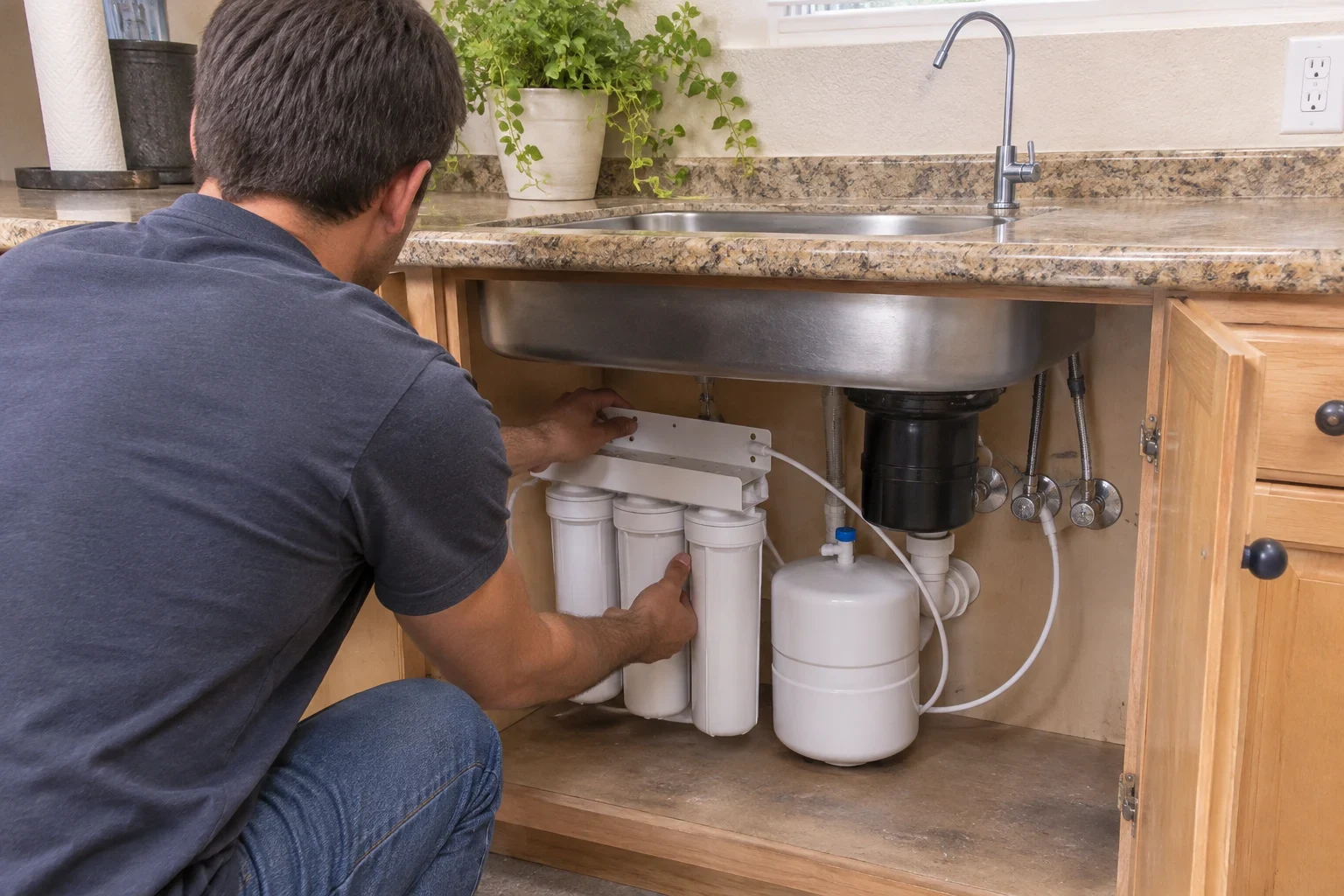
Filtered water at one tap, where you actually drink it
Reverse osmosis forces your water through several filter stages and then a semi-permeable membrane with openings far smaller than a dissolved mineral. Most dissolved solids, the chlorine flavor and a long list of trace contaminants are left behind and rinsed away. The finished water collects in a compact tank under the sink and reaches you through its own faucet beside the main one.
Think of it as treatment for a single tap. Showers, laundry and the rest of the plumbing are untouched; whole-home filtration or a water softener looks after those. For the water you drink, cook with, brew coffee from and freeze into ice, it goes further than anything else you can install in your home.
Water across the West Valley carries a heavy mineral load, and it shows up as crust in kettles and coffee makers. An element buried under scale needs longer to bring water up to temperature. Starting with filtered water keeps those appliances clean and working less, and it ends the routine of hauling cases of bottled water in from the car.
What the installation includes
Capacity matched to your household
Tank volume and membrane output are chosen around how much water your household actually drinks and cooks with. Two people and a family of five call for different setups, and a unit that is too large only crowds the cabinet.
A separate faucet in a finish you choose
Your drinking water gets its own spout, set on the sink deck or the countertop, and we match it to your current fixtures wherever possible. Where no spare opening exists, we cut a clean hole through the sink or counter.
A cabinet that still works
We place the filters, tank and tubing so the disposal, shutoff valves and your stored items stay within reach. Filter housings go where you can swap them without pulling everything out.
Protection against leaks
Each push-fit joint is pressure-tested before we pack up. We can also fit a leak-stop valve that closes the supply if water ever collects on the cabinet floor.
Optional fridge line
A line to your refrigerator lets the ice maker and dispenser use the same filtered water. The ice comes out clearer, with no taste of its own.
A clear filter schedule
Every stage gets a label, and we leave a short written note on what to replace and when, so upkeep never slips by unnoticed.
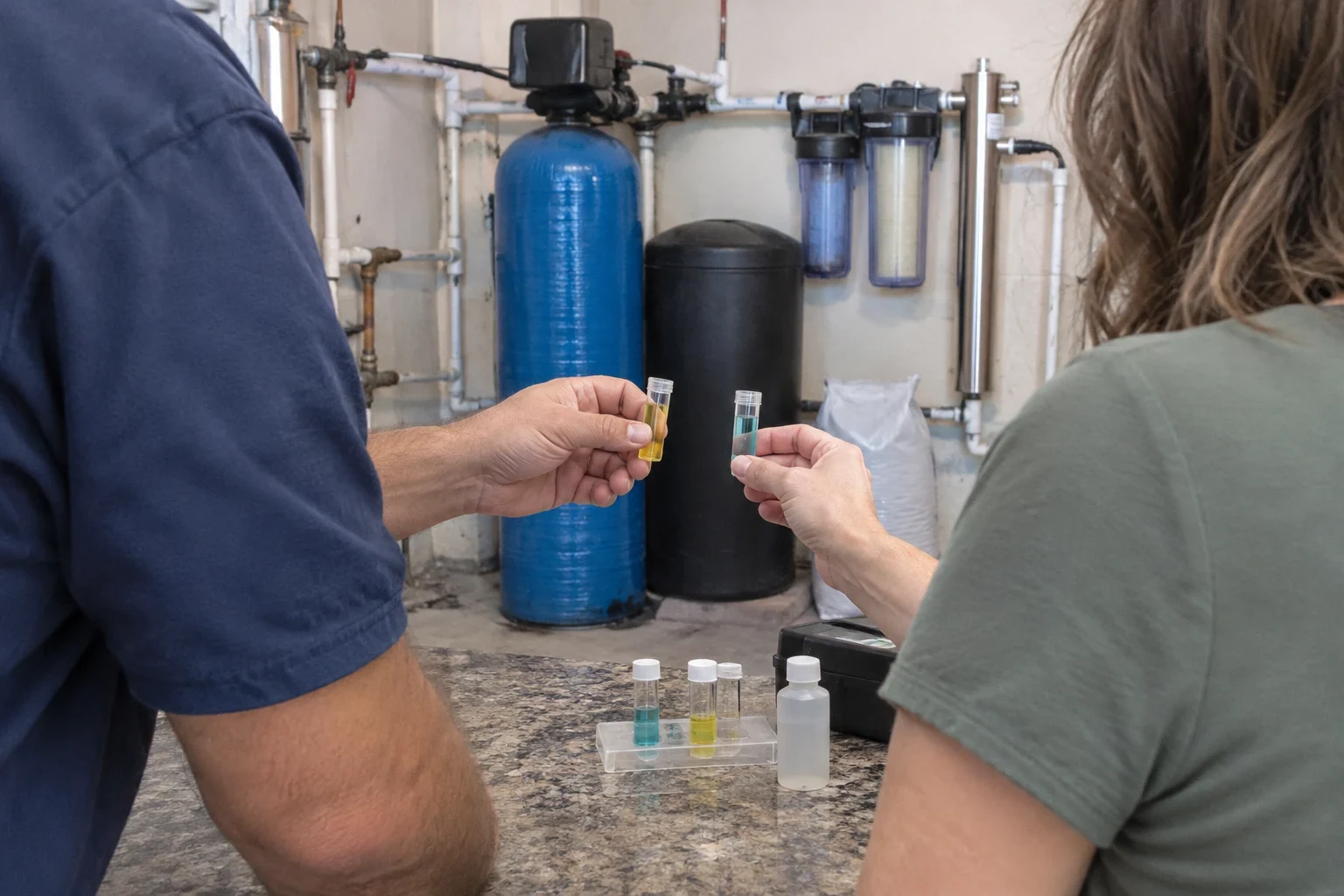
Signs a reverse osmosis system makes sense
- Bottled water is a standing errand
- When cases of water are on every shopping list and empties pile up by the door, an under-sink system tends to earn its place on convenience alone, and the store runs stop.
- Scale builds in your kettle and coffee maker
- A chalky white layer in the kettle, or a coffee maker that keeps asking to be descaled, points to mineral-rich water. Filtered water keeps those appliances cleaner and quicker to heat.
- Your water tastes of chlorine or minerals
- It is often most noticeable in coffee, tea or a glass left sitting on the counter. Reverse osmosis takes that flavor out.
- Cloudy ice and filmed glasses
- Dissolved minerals turn up as murky ice cubes and a haze on glassware that hand-washing will not clear.
- The fridge filter falls short
- Refrigerator cartridges are small and aimed mostly at taste. A dedicated system filters your drinking water far more thoroughly.
Your installation, step by step
- 1
Planning on the phone
We start with a call about your sink, the cabinet below it and how many people drink and cook from that kitchen. If a fridge line interests you, say so then. We go over the options and give you a written quote before any date is set.
- 2
Clearing and protecting the cabinet
On the day, we take everything out from under the sink, lay a cover over the cabinet floor and shut off the cold water supply. Then we mark where the faucet will go and where the drain connection will tie in.
- 3
Mounting and plumbing
The filter assembly and storage tank go up first, followed by the faucet. Supply and drain lines are connected, plus the fridge line if you chose one. Tubing is cut to length and routed neatly along the cabinet, never left in loose coils.
- 4
Flushing and leak checks
New filters and a fresh membrane need a full flush before the water is ready to drink. We run the system through that cycle, check every joint for drips and make sure the tank fills and the faucet delivers a steady flow.
- 5
Handover and tidy-up
We show you the shutoff, explain what each filter stage does and point out when each one is due. Your cabinet goes back the way we found it. A typical install takes a few hours.
What affects the cost
Reverse osmosis is one of the more predictable jobs we do, but a few things change the final figure. We go through them on the phone and list each one in your written quote, so nothing appears on the invoice that you did not see first.
- System type and capacity
- Basic tank systems cost less than models with extra stages, remineralization or higher output membranes. Some designs also waste less water per gallon produced, which lowers what you pay the utility over time.
- Faucet and finish
- A standard chrome faucet is the simplest option. Designer finishes and matching styles cost more.
- Countertop and sink material
- Drilling a new faucet hole through stone or quartz takes more time and care than using an existing knockout.
- Fridge connection
- Running a line to the refrigerator adds tubing, fittings and labor, more so when the fridge sits far from the sink.
- Ongoing filter changes
- Pre-filters and post-filters are replaced periodically and the membrane less often. We tell you upfront what replacements will run so you can plan for them.
Reverse osmosis questions
- How much water goes down the drain with reverse osmosis?
- Every RO membrane needs a steady flow of rinse water to keep itself clean, so some water always leaves through the drain line. Today's designs send far less to the drain than units sold a decade or two ago. Feeding the system softened water also helps the membrane do its job more efficiently. For each model we recommend, we tell you its drain-to-product ratio so you can compare them side by side.
- Is there room for it next to my garbage disposal?
- In most kitchens, yes. Slim tanks and filter heads that hang on the cabinet wall leave room for the disposal and the things you keep under the sink. If a cabinet is unusually tight, we explain the options before quoting rather than forcing a system into the space.
- Does reverse osmosis strip out healthy minerals?
- It does remove most dissolved minerals, along with the things you want gone. For most people, meals provide far more of those minerals than drinking water ever does. If you prefer some of them back, a remineralization stage can be added, and it also softens the slightly flat taste some people pick up on.
- How often will I change filters?
- Expect to swap the pre-filters and the carbon polishing filter about once every twelve months. The membrane is replaced less often, typically after several years, with the exact timing set by your household's usage and the water coming in. We leave a written schedule with the system so you always know what is next.
- Do I also need a water softener?
- They handle separate jobs. Reverse osmosis treats the water at one tap for drinking and cooking, while a softener keeps scale out of the pipes, water heater and fixtures throughout your home, and softened feed water helps the RO membrane last longer as well. If you add water softener installation, the softener's resin carries a 15-year warranty.
- Can the system feed my refrigerator and ice maker?
- Yes. We run a dedicated line from the system to the fridge so the dispenser and ice maker draw the same filtered water as your drinking faucet. Mention it when you call and we will include it in the quote.
Talk through a drinking water system for your kitchen
Describe your sink, your cabinet and roughly how much water your household drinks and cooks with. We will suggest a system that suits the space and give you a written quote before any date goes on the calendar.