ServicesAutomated Salt Delivery
Automated Salt Delivery in Surprise, AZ
On each visit we carry softener salt into your home, fill the brine tank to the proper level and check it for bridges and buildup. Visits are spaced by how quickly your softener actually uses salt, so it keeps regenerating on strong brine and the heavy bags stop being your job.
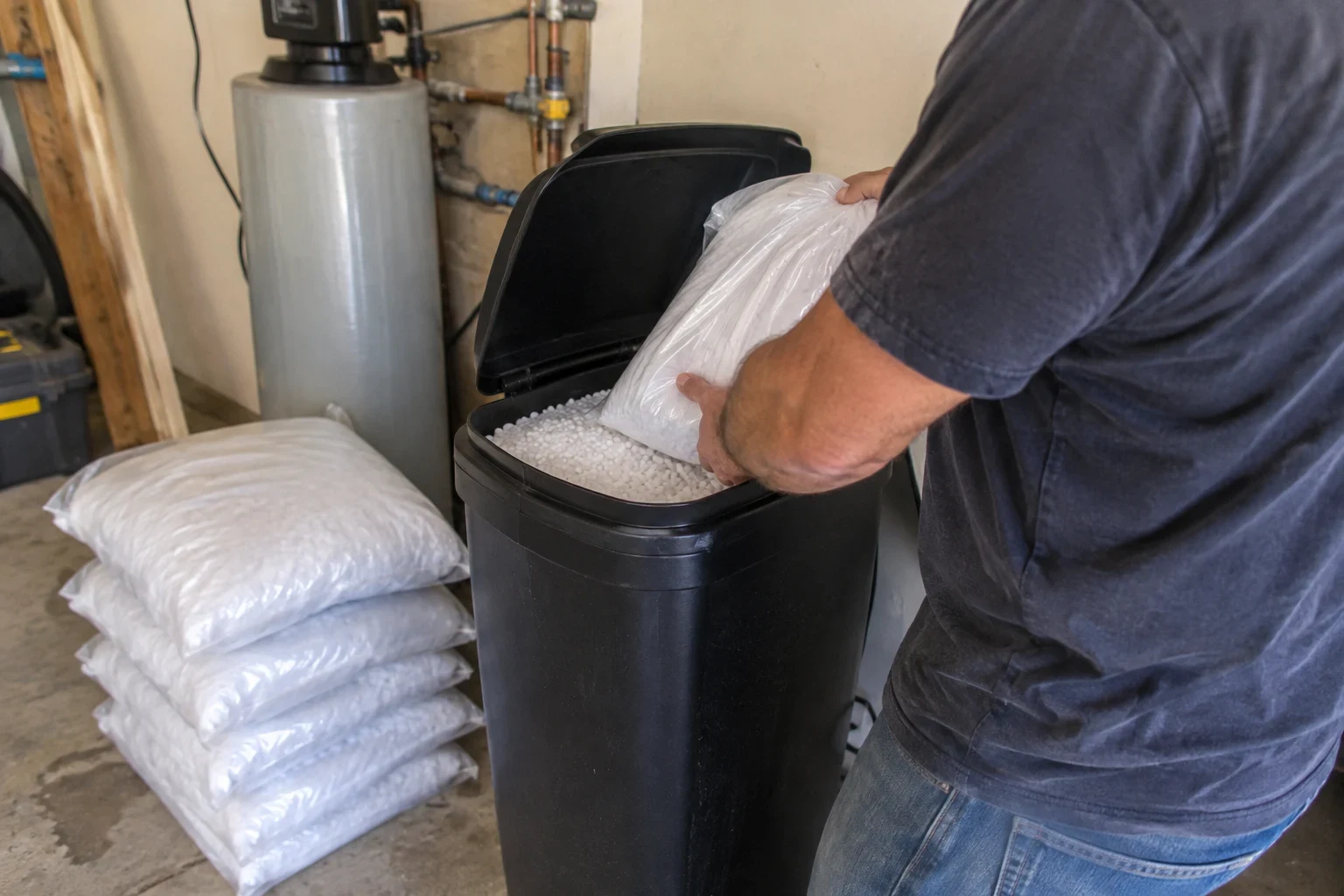
Salt that arrives before the tank runs low
Softening depends on brine. Once the salt in the tank is gone, the resin no longer gets recharged, hard water passes straight through to your fixtures, and scale begins collecting on faucet aerators and inside the water heater. For most people the first clue is cloudy spotting on clean glassware.
Automated salt delivery takes that off your hands. We set the visit interval by how much salt your home really goes through, pour the salt into the brine tank ourselves, give the tank and valve a look while we are there, and record when the next stop is due. The 40-pound bags no longer ride home in your car, and the softener carries on without needing your attention.
Running costs come into it too. Scale coats a water heater's tank and elements like a layer of insulation, so the heater has to run longer to bring water up to temperature. A softener that never runs short is one of the easiest ways to keep that efficiency intact against the West Valley's hard water.
What each delivery includes
- Salt poured, not dropped off
- We carry the bags in, open them and fill the brine tank to the right level rather than leaving a stack in the garage. The empty bags leave with us.
- A check for salt bridges
- A hard crust can form across the tank and leave a hollow gap underneath. The tank looks full, but the water below never turns into brine. We check for this on every visit and break it up when we find it.
- Sludge and residue checks
- Salt can recrystallize into a mushy layer at the bottom of the tank that gets in the way of the brine draw. If we see heavy buildup, we show you and explain whether a cleanout makes sense.
- Your choice of salt
- We can supply evaporated salt pellets, solar salt crystals or potassium chloride, depending on what your softener's maker recommends and what you prefer. We explain how each one behaves in the tank so the choice is an informed one.
- A schedule that follows your use
- Household size, softener settings and seasonal water use all change how fast salt goes. If the tank is close to empty or still nearly full when we arrive, we move the next visit accordingly.
Signs your softener is running short on salt
Spots and film are back
White spots on shower glass and a dull film on dishes usually mean hard water is reaching the taps again.
Water sits above the salt
Lift the lid. If you see standing water and only a thin layer of salt, the softener has been regenerating with weak brine or none at all.
The level never seems to drop
A tank that looks full for months can point to a salt bridge rather than low use. The softener may be pulling plain water while the salt sits untouched above it.
Soap and shampoo behave differently
Hard water makes soap harder to lather and harder to rinse off. If showers feel different from a few months ago, low salt is a likely cause.
Hauling bags has become a chore
Lifting heavy bags out of a car and into a tank, in a garage that runs well past 100 degrees in summer, is a fair reason to hand the job to someone else.
How salt delivery works
- 1
A phone call to set things up
Tell us your softener's brand, roughly how many people live in your home and which salt you use now. We suggest a starting interval and the salt type that suits your unit.
- 2
First visit and a baseline
On the first delivery we check the brine tank for bridges or sludge, look at the valve settings and note how much salt the tank holds. That gives us a baseline for spacing future visits.
- 3
Regular deliveries
We arrive on the agreed schedule, fill the tank, take the empty bags away and leave the area as we found it. If something about the softener looks off, we tell you what we saw instead of guessing.
- 4
Adjustments over time
After a few visits the pattern is clear. We lengthen or shorten the interval so you are not paying for salt that sits unused or running out between stops.
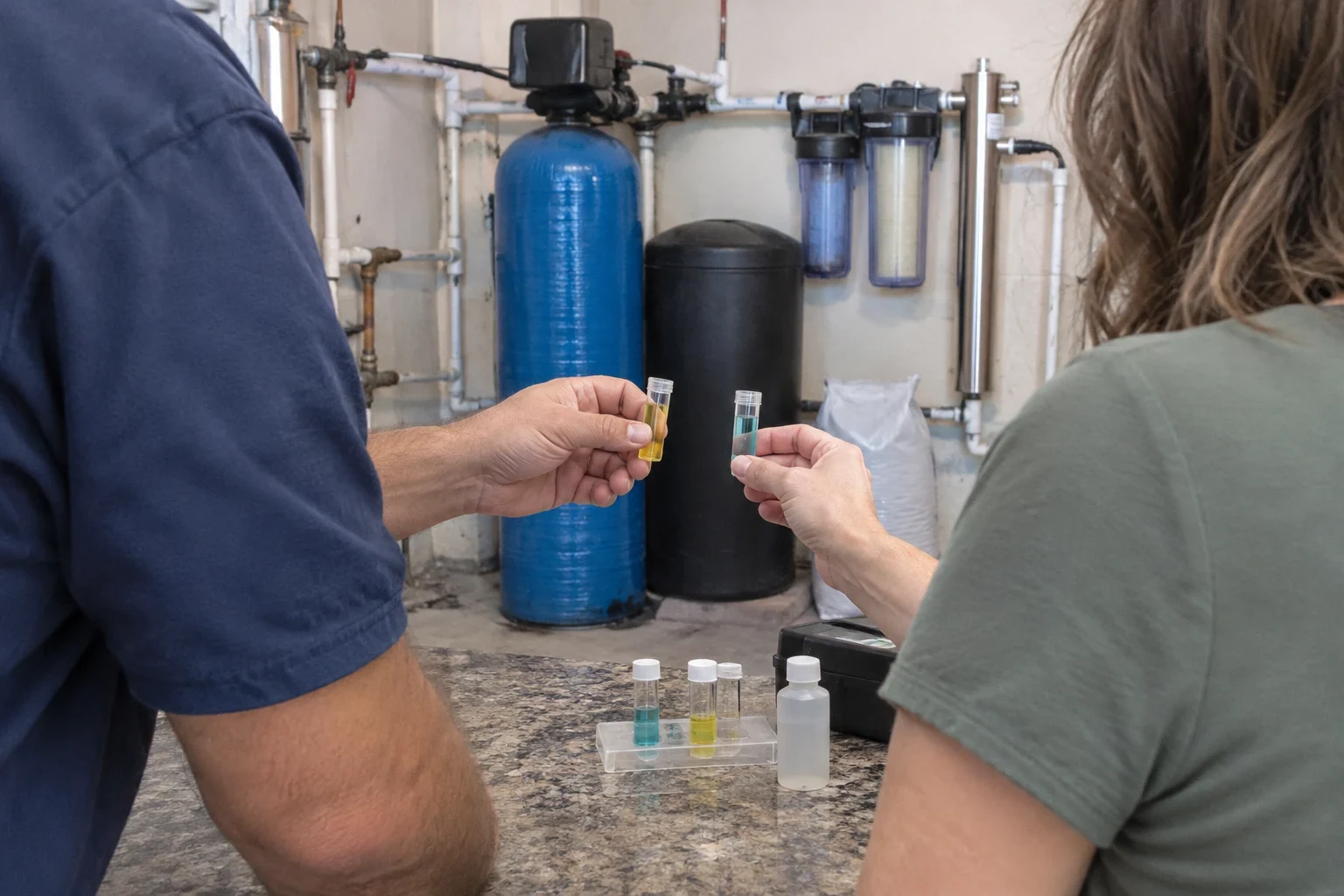
What shapes the cost of salt delivery
Delivery pricing depends mostly on how much salt your home goes through and which kind you choose. We go over the numbers on the phone before the first visit, so you know what each delivery covers.
- Salt type
- Potassium chloride generally costs more than sodium-based salt, and evaporated pellets usually cost more than solar crystals. Some softeners run more cleanly on higher-purity salt, which can be worth the difference.
- How much salt you use
- Larger households and softeners set for harder water regenerate more often and use more salt each month.
- Visit frequency
- Fewer, fuller visits and more frequent smaller ones change the total per delivery. We help you find the spacing that fits your tank size.
- Tank condition
- Breaking up a bridge or clearing heavy sludge takes extra time. We tell you before doing anything beyond the regular fill.
Salt delivery questions
Something not covered here? (623) 887-4658
Do I need a particular softener to use your delivery?
No. Most softeners with a brine tank take the same kinds of salt. Tell us the make and model and we will match the salt to it. If your unit came through our water softener installation service, we already know its settings.
What happens if I'm not home on delivery day?
We work out access when we set up the schedule. Some homeowners leave a side gate or garage open on delivery day, while others prefer to be there. Either way, we agree on the plan by phone ahead of time.
Does keeping salt in the tank really affect my energy use?
It can. Scale on water heater elements and tank walls slows heat transfer, so the heater works harder for the same hot water. A softener that never runs dry keeps that scale from forming, which also helps dishwashers and washing machines heat water efficiently.
How does regular salt affect the softener's resin?
The resin does the actual softening, and it depends on a steady supply of brine to recharge. We offer a 15-year warranty on the resin, and keeping the tank properly supplied is part of letting that resin do its work for the long run.
Can I switch salt types later?
Yes. Many people start with sodium-based salt and later move to potassium chloride, or the other way around. Let us know before your next visit and we will bring the new salt and adjust the schedule if it dissolves at a different rate.
I have a reverse osmosis system. Do I still need salt delivery?
If you also have a softener, yes. A reverse osmosis system treats drinking water at one tap, while the softener protects the rest of your home. Softened water feeding the RO membrane can also help it last longer.
Hand the salt over to us
Share the make of your softener and roughly how many people live in your home, and we will recommend a salt and a visit interval to start with. After that, the brine tank stays stocked and the store run comes off your list.